Who doesn’t love the feeling of stepping out with a mesmerizing fragrance that turns heads and leaves a lasting impression? But let’s be honest—most of us have experienced the heartbreak of our favorite perfume vanishing into thin air within a couple of hours. Frustrating, right?
Well, I’ve got some good news for you! Some science-backed and expert-approved tricks can help your perfume linger all day long. So, if you’re tired of reapplying your fragrance every few hours, this blog post is just for you!
Content reviewed by:

Ms. Suman Sharma
Perfumer & Fragrance Expert – Canada
To ensure a long-lasting fragrance, apply perfume to pulse points, layer it with matching scented products, and use a moisturizer for better adherence. Store perfumes away from heat, light, and humidity to maintain their quality. Choose higher concentrations like Eau de Parfum for extended wear. Skin chemistry, hydration, and diet also impact fragrance longevity. Follow these expert-backed tips to enjoy your signature scent all day!
How to Make Perfume Last Longer – The Science Behind
Ever wondered why some perfumes last all day while others disappear in a flash? It all comes down to scent notes and how they interact with your skin chemistry.
Understanding Perfume Notes and Their Longevity
Fragrances are built in layers:
- Top Notes: These are the first to hit your nose and typically last 15-30 minutes. Examples include citrus, light florals, and herbs.
- Middle Notes (Heart Notes): These develop after the top notes fade and last 3-5 hours. Examples include spices, fruits, and florals.
- Base Notes: These are the foundation of a perfume and provide long-lasting depth. Examples include musk, amber, vanilla, and woodsy elements.

Related Post: Understanding Fragrance Notes: The Essence of Perfume
Why Some Fragrances Last Longer Than Others?
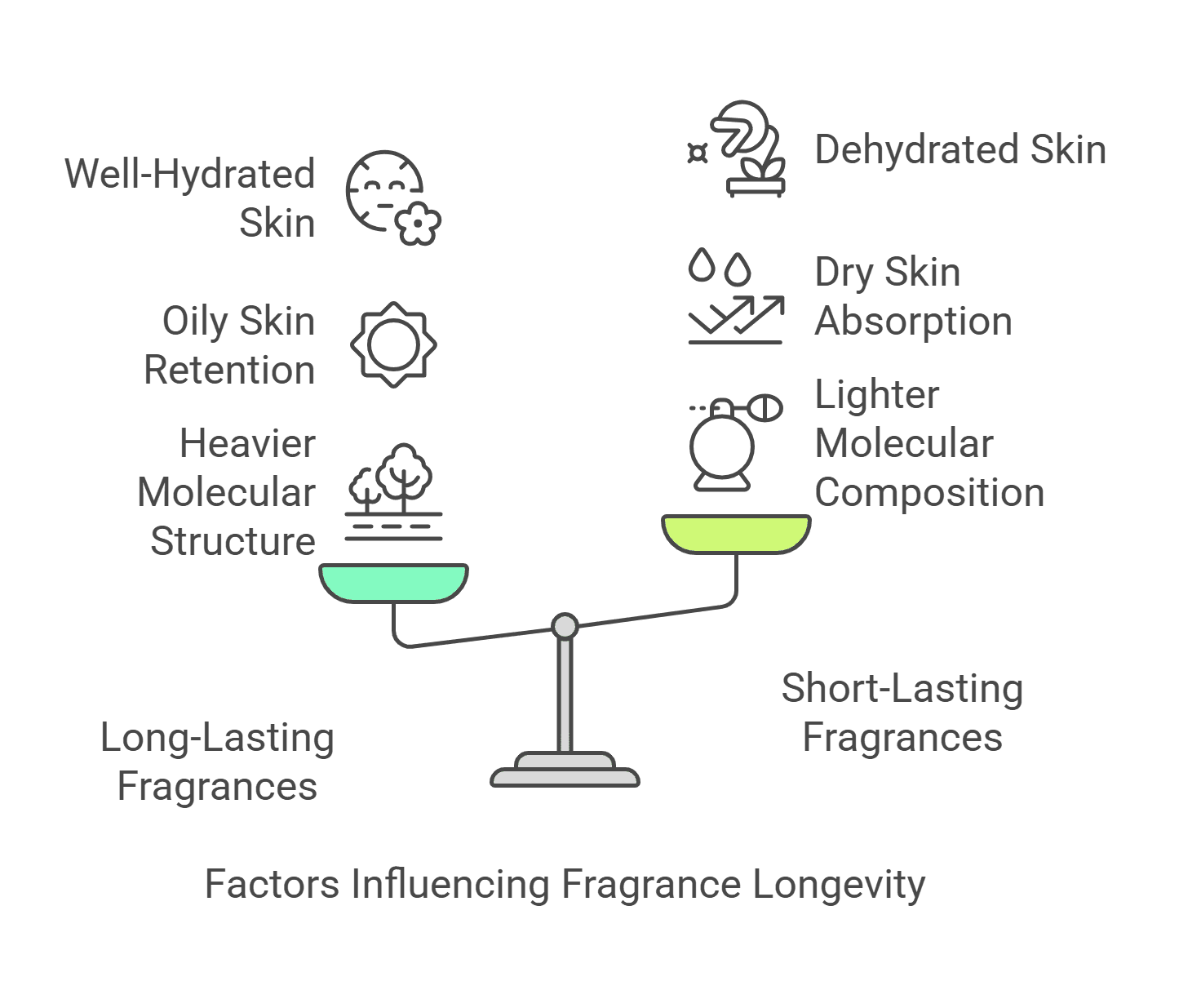
- Woody, oriental, and musky perfumes tend to last longer due to their heavier molecular structure.
- Citrus and aquatic scents evaporate faster because of their lighter composition.
- Oily skin retains fragrance longer compared to dry skin, which absorbs scent quickly.
- pH balance and hydration influence how a fragrance interacts with your skin. Well-hydrated skin holds scent longer.
Travel Perfume Bottles
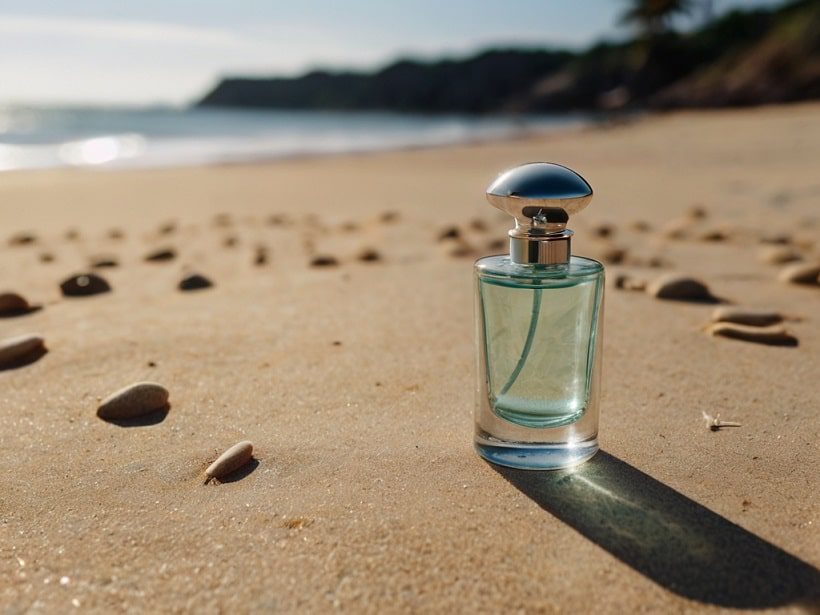
Travel Perfume Bottles – compact, convenient, and chic, these little prodigies allow you to take your favorite scent wherever you go. Traveling is an adventure that engages all our senses, including the sense of smell. From the crisp scent of mountain air to the salty breeze of the ocean, each destination has its unique scent. But what about carrying your signature perfume along on your itinerary?
How to Make Perfume Last Longer with the Right Application?
The way you apply perfume can make or break its staying power. Here’s how to do it right:
Best Pulse Points to Apply Perfume for Long-Lasting Scent
Pulse points generate heat, helping to diffuse fragrance over time. Apply perfume on:
- Wrists (but don’t rub them together!)
- Neck and collarbones
- Behind the ears
- Inside elbows
- Behind the knees
Also Read: Why apply Perfume on pulse points?
Areas & Times to Avoid Applying Perfume
1. Sweaty or Oily Skin
As per our expert reviews, perfume molecules don’t blend well with body sweat and natural oils, leading to an unpleasant scent. Always apply perfume on clean, dry skin for longer lasting.
2. Avoid Spraying on Hair with Alcohol-Based Perfumes
Mostly perfumes, available in the market, contain alcohol in some way or other, which may damage your hair by stripping the natural oils in your hair. Hence, rather than spraying perfume directly on hair, you should spray the perfume on your hairbrush while combing for a subtle scent.
3. Avoid Applying Perfume on Delicate Fabrics & Jewelry
Although I don’t have any official data to prove this, still, to be on the safer side, you shouldn’t spritz perfume on delicate materials like silk and leather. Apply perfume directly on your skin instead.
Secondly, avoid spraying perfume directly on jewelry as it may tarnish the metal/jewelry. Spray on skin instead of clothing / Jewelery to prevent discoloration or residue buildup.
4. Sun-Exposed Areas During Hot Weather
If you have a sensitive skin, then you must test perfumes before applying on your skin, as certain ingredients in perfumes (especially citrus-based perfumes) may react with the sun that may further lead to irritation or discoloration (especially citrus-based perfumes).
If you have to go out in direct sunlight, you’d apply perfume to covered areas like wrists or behind the knees instead of exposed skin.
5. Overusing Perfume in Closed Spaces
Sometimes we tend to wear strong scents without considering time and place. Strong scents can be overpowering in areas like official meetings, offices, etc. It is advised to use light and subtle perfumes in such areas to avoid overwhelming others.
Layering Fragrance for Maximum Longevity
Layering different forms of the same fragrance enhances longevity. Try this routine:
- Shower with a matching scented body wash.
- Apply an unscented moisturizer or petroleum jelly to pulse points.
- Spritz your perfume on top of the moisturizer for better adherence.
- Lightly mist your clothes for added sillage (but avoid delicate fabrics).
Choosing the Right Perfume Concentration for Longer Wear
Not all perfumes are created equal! Here’s how different concentrations impact longevity:
- Eau de Cologne (EDC): 3-8% oil concentration (Lasts 1-3 hours)
- Eau de Toilette (EDT): 5-15% oil concentration (Lasts 2-4 hours)
- Eau de Parfum (EDP): 10-20% oil concentration (Lasts 4-8 hours)
- Parfum (Extrait): 25-40% oil concentration (Lasts 8-12 hours)
Related post: Essential Oil Percentage in Perfumes
How to Make Perfume Last Longer with Proper Storage
Perfume isn’t just a liquid; it’s a delicate composition that needs proper care. Follow these tips to preserve its quality:
Why Heat, Light & Humidity Ruin Perfume Longevity
Heat and direct sunlight can break down perfume molecules, altering the scent. I always store my perfume bottles in a cool, dark place, such as a dresser drawer or a storage box.
Best Places to Store Your Perfume for Maximum Shelf Life
- Don’t store Perfumes in your Bathroom
- Humidity can degrade perfume and affect its longevity. Instead, store your bottles in a dry area.
- Seal Bottles Tightly
- Exposure to air can cause perfume to oxidize, changing its fragrance. Always keep bottles tightly closed after use to maintain their integrity.
How Skin Chemistry Affects Perfume Longevity
The Role of Diet in How Long Perfume Lasts
Although its’ hard to link, but your diet can affect how a fragrance interacts with your skin. Strong-smelling foods like spices, garlic, and onions can alter your natural scent and impact perfume longevity.
Hydration & pH Balance – Key Factors in Perfume Retention
If your skin is dry, it’ll absorb the fragrance quickly and you’ll experience that your perfume fades faster. Applying an oil-based moisturizer before perfume helps lock in the scent.
A more acidic skin pH can break down perfume faster. To counteract this, ensure your skin is well-moisturized and balanced.
Final Thoughts on How to Make Perfume Last Longer
Making your perfume last longer isn’t rocket science—it’s all about understanding fragrance composition, applying it strategically, and storing it correctly. Whether you’re layering scents, choosing the right concentration, or protecting your perfume from heat, these simple tweaks can make a huge difference.
So, the next time you spritz your signature scent, use these expert tips and enjoy a fragrance that sticks around all day (and maybe even into the night! ).
Frequently Asked Questions
How can I make my perfume last longer on skin?
To make perfume last longer on your skin, apply it to warm pulse points like wrists and behind the ears after moisturizing. Layer with matching scented products, and avoid spraying on sweaty or oily skin so scent molecules stick better.
Hair can hold scent well, but alcohol-based perfumes can dry it out. Instead of spraying directly, mist perfume on a hairbrush and comb it through the hair. This gives a gentle scent that lasts longer.
Avoid spraying perfume on sweaty or oily skin, delicate fabrics, jewelry, and sun-exposed areas. These spots can break down the fragrance faster or cause irritation or staining, reducing how long it lasts.
Layering enhances scent longevity by building fragrance on top of a base. Use a matching shower gel, moisturizer, or petroleum jelly on pulse points, then spray perfume on top. Each layer helps trap scent molecules for longer wear.
Perfumes vary by oil concentration: Eau de Cologne lasts 1–3 hours, Eau de Toilette lasts 2–4 hours, Eau de Parfum lasts 4–8 hours, and Parfum (Extrait) lasts 8–12 hours. Higher concentration means more fragrance oils and longer staying power.
In heat, perfume molecules evaporate quickly, especially lighter scents. Choosing higher-concentration fragrances and applying them to covered, cool areas of your body helps reduce evaporation and keeps the scent lasting longer.
Store perfume in a cool, dark place away from heat, light, and humidity. These factors break down fragrance molecules and reduce scent strength, so proper storage helps preserve aroma and longevity.
Yes. Your skin chemistry, hydration, and even diet influence how fragrance molecules interact with your body. Well-hydrated skin tends to hold scent better than dry skin, which absorbs fragrance quickly.
Dry skin absorbs scent faster and fades quickly, while oily or well-hydrated skin holds fragrance longer. Using moisturizer before perfume helps dry skin retain scent better, making the fragrance last longer throughout the day.
Yes. Blending essential oils with a carrier oil like jojoba can create a custom long-lasting fragrance. Oil-based blends often last longer than alcohol-based perfumes because they cling to skin and evaporate more slowly.

Satnam Sadeora
Lifestyle Product Researcher & Curator
Satnam Sadeora is the founder of Quintessify.com, where he explores and reviews everyday lifestyle essentials, including coffee, fragrances, car accessories, and carefully selected health-related products.
He focuses on clear comparisons, thoughtful research, and honest insights to help readers choose products that fit their preferences and budget.