Scent has shaped human civilization for over 4,000 years. Across ancient Egypt, Mesopotamia, India, Japan, and the Middle East, fragrance was more than aroma — it was ritual, identity, devotion, and social status.
The cultural significance of fragrances lies in how societies used scent to communicate with the divine, mark life transitions, express power, and preserve memory. From temple sacred incense to royal attars, fragrance has long carried symbolic and spiritual meaning far beyond personal preference.
Sacred incense is a blend of aromatic plant materials burned in spiritual settings to elevate prayer, mark sacred space, or signify transformation.
Key Takeaways:
- Fragrance has held spiritual, social, and symbolic meaning for over 4,000 years.
- Ancient civilizations used scent in temple rituals, burial rites, and royal ceremonies.
- Religious traditions worldwide still use incense and natural perfume today.
- Modern fragrance families trace their roots to historical regional scent traditions.
- The cultural significance of fragrance continues today through identity and heritage expression.
What Is the Cultural Significance of Fragrance?
The cultural significance of fragrance refers to the symbolic, spiritual, and social roles scent plays within a society — beyond hygiene or personal preference.
Fragrance has historically functioned as a spiritual bridge, a social marker, and a symbol of identity across civilizations. While functional use addresses odor control, cultural meaning runs much deeper — into the sacred, the ceremonial, and the deeply personal.
Put simply: In most of human history, what you burned, wore, or offered as scent said something about who you were and what you valued.
Historical Origins of Fragrance in Ancient Civilizations
Fragrance has one of the longest documented histories of any human practice, making the history of perfume deeply intertwined with cultural development. Archaeological evidence places ritualized scent use as far back as 4,000 years, long before perfume became a commercial product. From Egyptian temple smoke to Mesopotamian distillation experiments, the story of fragrance begins not in a bottle — but in fire, resin, and devotion.
Ancient Egypt — Sacred Scent and Divine Ritual
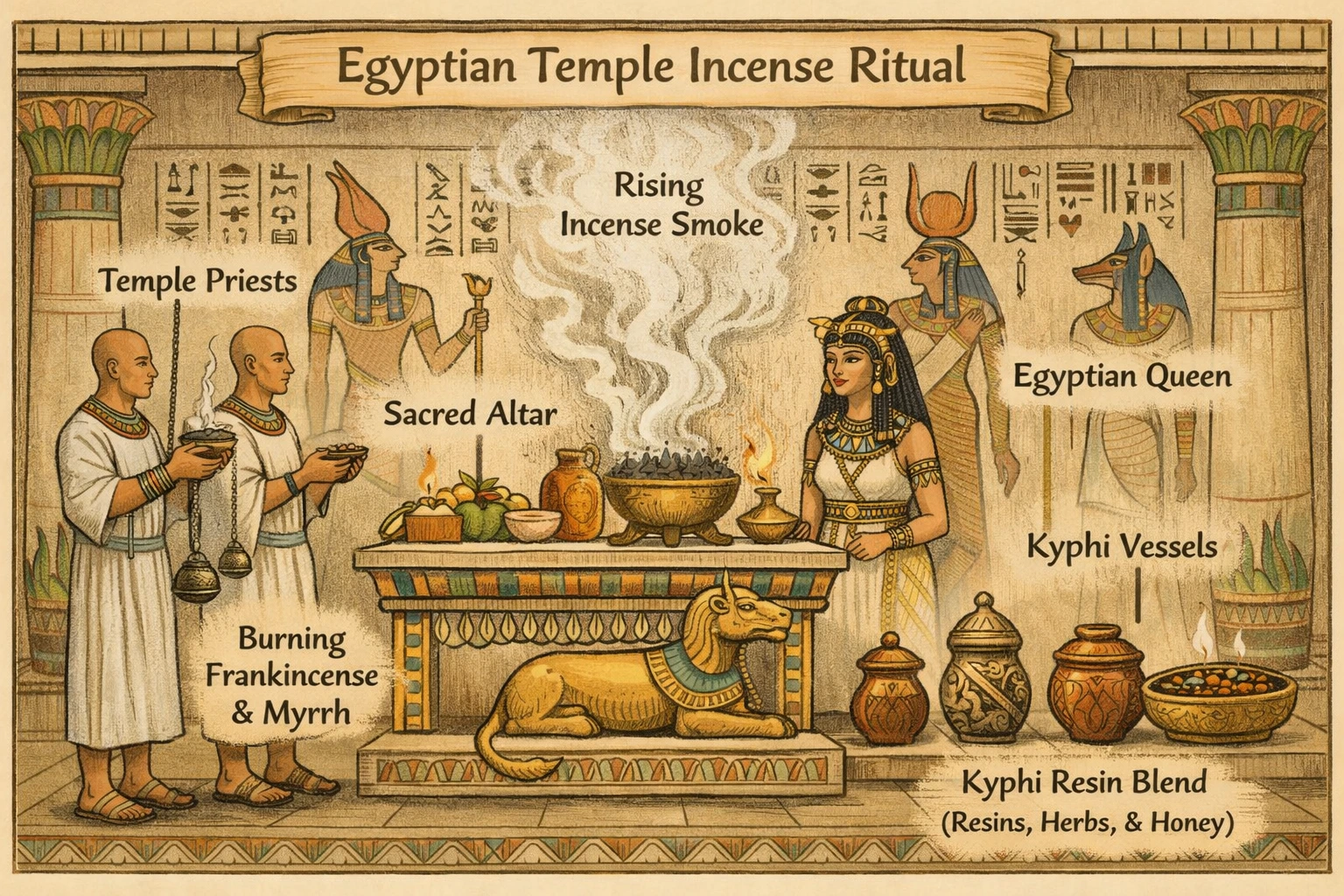
In ancient Egypt, fragrance functioned as a theological necessity rather than a luxury. Temple priests burned frankincense and myrrh daily as offerings to the gods — the smoke itself was believed to carry prayers upward to the divine. The word “perfume” is thought to trace back to the Latin per fumum, meaning “through smoke,” which tells you a lot about how early scent was experienced.
Kyphi, a complex resin blend documented in Egyptian temple inscriptions, was used specifically in evening rituals and during embalming. Fragrant oils were applied to mummies, not for preservation alone, but to prepare the body for the afterlife. Egyptian royalty, including Cleopatra, used fragrance to reinforce divine authority and political power.
Mesopotamia — The First Recorded Perfumer
Tapputi. Referenced in a 1200 BCE Cuneiform tablet now associated with the British Museum’s ancient Mesopotamian archive, Tapputi is widely considered the world’s first recorded chemist — and she was a perfumer.
She used early distillation methods, combining flowers, oils, and resins with water and filtering them multiple times to extract concentrated scent. This wasn’t folk craft. It was applied chemistry, documented and systematic. Mesopotamian fragrance production laid the technical groundwork that would influence perfumery for millennia.
The Middle East — Foundations of Modern Perfumery
If ancient Egypt gave fragrance its spiritual dimension, the broader Middle East gave it its technical and cultural architecture. Oud (agarwood), rose, and amber formed the backbone of regional scent traditions long before modern fragrance families were named.
Related Post: Understanding how perfumes are made and their core components.
During the Islamic Golden Age, scholars like Ibn Sina (Avicenna) refined distillation techniques that made it possible to extract essential oils with far greater precision. These innovations didn’t just improve perfume — they became the foundation of modern chemistry. The cultural context mattered too: in Islamic tradition, the Prophet Muhammad is widely reported to have had a deep affinity for fragrance, and wearing scent before prayer became a respected practice across Muslim communities.
Hospitality customs throughout the Arabian Peninsula also incorporated fragrance — oud incense was (and still is) burned to welcome guests, a tradition that has continued relatively unchanged for centuries.
Asia — Spiritual and Philosophical Dimensions
India — Incense, Ayurveda, and Devotion
In India, fragrance is inseparable from daily spiritual life. Sandalwood paste is applied during temple worship. Jasmine garlands are offered to deities. Incense marks the beginning of prayer and the rhythm of the day. Within Ayurvedic tradition, specific scents carry therapeutic and purifying properties — sandalwood for calm, camphor for clarity.
What makes the Indian approach distinct is integration. Fragrance isn’t reserved for ceremony. It’s woven into the ordinary — a constant thread between the physical and the sacred.
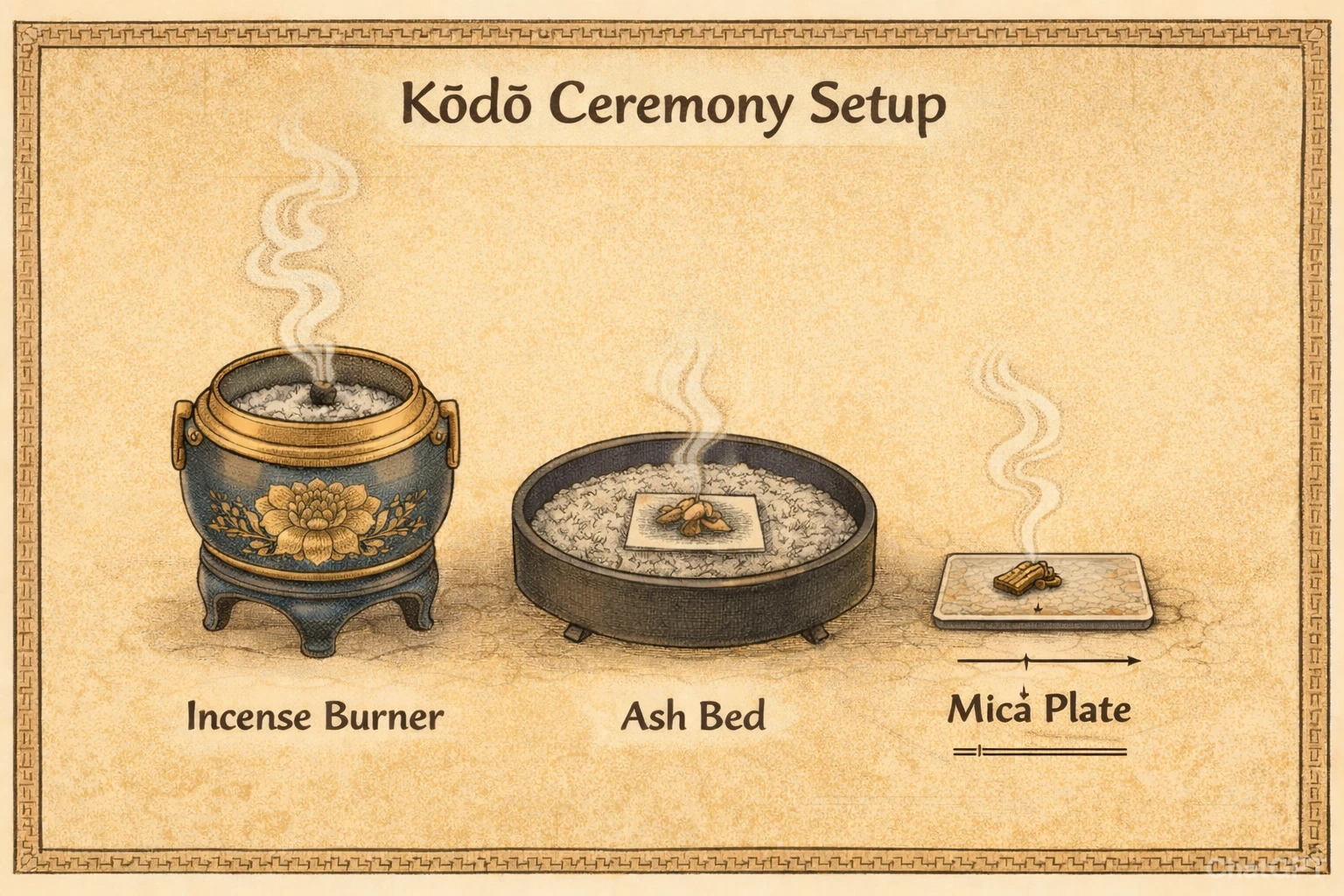
Japan — The Art of Kōdō
Japan developed one of the most formalized approaches to fragrance anywhere in the world. Kōdō, or “The Way of Fragrance,” emerged as a structured practice during the Muromachi period (14th–16th centuries), placing incense appreciation alongside the tea ceremony and flower arranging as disciplines of cultural refinement.
Practitioners of Kōdō don’t say they “smell” incense — they “listen” to it. That linguistic distinction alone captures the philosophy: fragrance as something to be attended to with patience and presence, not just inhaled. Japanese incense traditions are recognized as part of the country’s protected intangible cultural practices.
How Fragrance Plays a Role in Traditions and Rituals
Religious Rituals — How Fragrance Transforms Sacred Space?
Across nearly every major religious tradition, fragrance functions as a purifier and a threshold marker — something that transforms ordinary space into sacred space.
- In Christianity, frankincense has been used in liturgical settings since early church history, with documented use in Catholic and Orthodox Mass. The Vatican’s liturgical documentation explicitly includes incense as part of solemn worship.
- In Islam, ritual cleanliness before prayer is encouraged, and the use of natural perfume (free from alcohol in some traditions) is considered virtuous.
- Hinduism integrates agarbatti (incense sticks) into daily puja, where the smoke is understood to purify the environment and carry offerings to the divine.
- Buddhism uses incense similarly — as an offering and a mindfulness tool during meditation.
The pattern is consistent: Fragrance signals a shift from the everyday to the elevated.
Social and Cultural Ceremonies
Beyond religion, fragrance marks the major transitions of human life. Weddings across South Asian, Middle Eastern, and North African cultures involve specific scented preparations — rose water, oud, henna mixed with fragrant oils — as deliberate ritual elements, not decoration. Funerary traditions across multiple civilizations have used fragrant resins to honor the dead. Royal ceremonies have historically incorporated rare perfumes as a display of wealth and authority — Egyptian pharaohs, Chinese emperors, and European monarchs all used exclusive scent as part of their political image.
Even modern hospitality customs carry this legacy. Burning oud in an Arabian home to welcome guests, or offering rose water to visitors in Persian culture, are social rituals with centuries of meaning behind them.
Emotional and Psychological Symbolism
There’s a reason a particular scent can take you back to a childhood kitchen or a specific person without warning. The “olfactory system connects directly to the brain’s limbic region” — the area responsible for memory and emotion — more immediately than any other sense. Cultural anthropologists note that this neurological reality has shaped how societies assign meaning to scent.
Cultures don’t just randomly select fragrances for ritual. Over generations, repeated associations between specific scents and significant life events create shared emotional memory. That’s why frankincense can feel solemn, jasmine joyful, and sandalwood grounding — not just to individuals, but to entire communities.
Fragrance Families and Cultural Identity
Historical Scent Profiles by Region
Fragrance families and cultural identity remain closely connected through historical scent preferences shaped by geography, religion, and trade.
- The Middle East developed rich, resinous profiles — oud, amber, musk — built for warmth and longevity.
- South Asia leaned toward florals: jasmine, rose, and tuberose, often used fresh rather than extracted.
- The Mediterranean favored citrus and herbal combinations — lavender, bergamot, herbs — lighter and more ephemeral.
- Colder northern regions gravitated toward woody, smoky notes from pine, cedar, and birch.
How To Make Perfume Last Longer
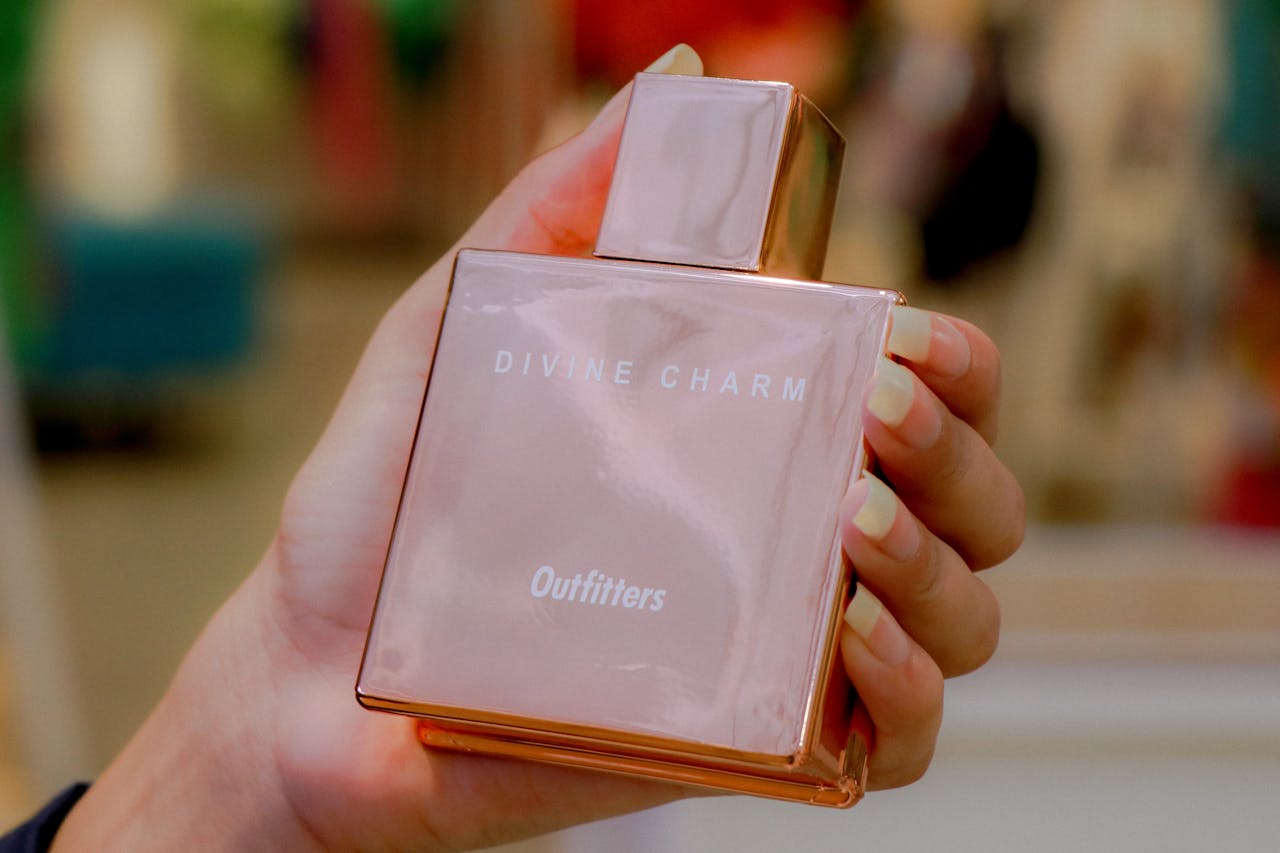
To ensure a long-lasting fragrance, apply perfume to pulse points, layer it with matching scented products, and use a moisturizer for better adherence. Store perfumes away from heat, light, and humidity to maintain their quality. Choose higher concentrations like Eau de Parfum for extended wear……..
Evolution into Modern Fragrance Families
These regional traditions eventually fed into the formal fragrance classification system used today: floral, woody, oriental, and fresh. The influence is direct. Oriental woody fragrance for men, for example, draws heavily on Middle Eastern oud and amber traditions — heritage ingredients now blended into contemporary fine perfumery. Western market evolution produced categories like floral fruity gourmand fragrance for women, which fuse European floral traditions with modern culinary notes — a much more recent development rooted in 20th-century French perfumery.
The lineage matters. Modern fragrance families aren’t invented from scratch. They’re built on thousands of years of cultural preference.
Comparative Overview of Fragrance Traditions
| Civilization | Primary Use | Key Ingredients | Cultural Meaning |
|---|---|---|---|
| Ancient Egypt | Temple ritual, burial | Frankincense, myrrh, kyphi | Divine communication, after-life preparation |
| Mesopotamia | Personal and ceremonial | Flower oils, cedar, resins | Early chemistry, social status |
| Middle East | Prayer, hospitality | Oud, rose, amber, attar | Spiritual purity, generosity |
| India | Daily worship, healing | Sandalwood, jasmine, camphor | Devotion, Ayurvedic purification |
| Japan | Meditative practice | Aloeswood (kyara), spices | Mindfulness, cultural refinement |
| Mediterranean | Social and medicinal | Lavender, citrus, herbs | Health, trade, social hygiene |
Trade routes such as the Silk Road and the Incense Route accelerated the spread of aromatic materials across civilizations. These exchanges did not dilute cultural fragrance traditions — they layered them, creating hybrid scent identities that continue to shape modern perfumery.
Modern Cultural Relevance of Fragrance
Fragrance has not lost its cultural significance; it has evolved in expression. Globalization has made oud available in New York, attar in Tokyo, and French florals in Mumbai. But rather than flattening fragrance culture, this access has sparked a renewed interest in heritage and origin.
Attar is a natural perfume oil derived from botanical distillation, traditionally used in South Asian and Middle Eastern fragrance cultures.
The niche perfumery movement — smaller, independent houses focused on uncommon ingredients and cultural storytelling — is partly a response to the homogeneity of mass-market fragrance. Consumers are increasingly drawn to scents that carry a narrative: where an ingredient comes from, how it’s harvested, what tradition it belongs to.
For many people today, fragrance is a form of personal branding that goes beyond preference. It’s a statement about values, roots, and identity. Wearing oud might be a connection to cultural heritage. Choosing a Japanese incense brand might reflect an interest in mindfulness. These choices often reflect cultural alignment and personal heritage. They carry the same symbolic weight they always have — just expressed individually rather than collectively.
The cultural significance of fragrances has not diminished — it has shifted from collective ritual to individual expression.
Conclusion: Why the Cultural Significance of Fragrances Still Matters
The cultural significance of fragrances remains deeply embedded in human identity, religion, and social tradition. From ancient Egyptian temple incense to modern niche perfumery inspired by regional heritage, scent continues to function as a symbolic language.
Understanding the history of perfume across civilizations reveals that fragrance has never been merely cosmetic. It has been spiritual, political, emotional, and communal.
Today, when someone chooses an oriental woody fragrance or a floral composition rooted in historical traditions, they are participating in a lineage shaped over thousands of years. Fragrance is not simply worn — it is inherited, interpreted, and redefined across generations.
Frequently Asked Questions
What does “cultural significance of fragrances” mean?
Cultural significance of fragrances refers to how scents are tied to traditions, beliefs, and social practices around the world. Different societies use smells in rituals, identity, healing, and everyday life to express meaning beyond just pleasant smells.
In ancient times, scents were part of religious ceremonies, social status, and daily grooming. Egyptians, Greeks, and Romans prized perfumes for both spiritual and luxury reasons, using natural materials like myrrh and frankincense.
Many cultures burn incense because its aroma is believed to connect people with the divine, purify a space, and support meditation or prayer. Materials like sandalwood and resin are chosen for these spiritual effects.
Fragrances shape identity by linking specific scents with regions or traditions. For example, sandalwood is tied to Indian culture, while lavender is linked to France. People often use these scents to express their heritage.
Systems like Traditional Chinese Medicine and Ayurveda use scents to balance energy and support wellbeing. Essential oils and aromatic herbs are chosen based on their effects on the body and mind.
Perfumes influence first impressions and personal presentation. Wearing the right scent can make you appear confident and respectful in social or formal settings.
During the Renaissance, perfumes became artistic expressions. Perfumers refined blending and used new extraction techniques, making scents lighter, more complex, and widely appreciated as art.
Traditional fragrances often include elements like sandalwood, jasmine, rose, ambergris, and spices. These materials carry symbolic meanings and are sourced from local environments.
Scents are used in ceremonial offerings to honor deities or mark sacred occasions. Flowers, resins, and aromatic plants are selected for their symbolic purity and reverence.
Natural fragrances like attars are valued because they are made from plant extracts and carry deep cultural meaning. In many traditions, they are believed to attract good energy and support spiritual goals.