Choosing the right car battery jump starter involves essential factors like matching its power to your vehicle’s needs, selecting the appropriate battery type, and ensuring it has critical safety features, charging time, battery life, and performance in your climate. Additionally, prioritize portability, durability, and good customer support. These factors will help you find a reliable and effective jump starter for your car.
Affiliate Disclaimer: This post contains affiliate links that may earn us some commission without any extra cost to you. Kindly read our “Affiliate Disclosure” for details.
Choosing the Right Car Battery Jump Starter: A Practical Guide
Imagine this: You’re on a road trip with your family, and suddenly your car battery dies in the middle of nowhere. You don’t have another vehicle around to help, and roadside assistance is taking too long. What do you do? This is where a car battery jump starter comes to the rescue. But with so many options out there, how do you pick the right one? Let’s break it down using the PAS (Problem-Agitate-Solution) framework to help you make an informed decision.
Problem: The Frustration of a Dead Car Battery
Having a dead car battery is one of the most frustrating and inconvenient problems a driver can face. According to a 2023 survey by AAA – American Automobile Association, nearly 20% of all roadside assistance calls in the U.S. are due to battery issues. Imagine being stuck in a parking lot, in the middle of a commute, or on a long road trip with no immediate help available. It’s a stressful situation, and without the right tools, you might have to wait for a tow truck or depend on others for a jump-start.
Agitate: The Consequences of Choosing the Wrong Car Battery Jump Starter
Choosing the wrong car battery jump starter can lead to several issues:
- Ineffectiveness: If your jump starter lacks the power needed for your vehicle, it won’t be able to start the battery. For instance, a standard car may require a jump starter with a peak rating of at least 400-600 amps, while larger vehicles like SUVs or trucks might need 800 amps or more.
- Safety Risks: A poorly designed or low-quality car battery jump starter can be dangerous. Models lacking essential safety features such as reverse polarity protection or short-circuit prevention might lead to accidents or damage your vehicle’s electrical system.
- Extra Costs: Investing in a car battery jump starter that doesn’t meet your needs might result in additional expenses. For example, if your model fails to perform, you might end up paying for roadside assistance or purchasing another jump starter.
- Portability Issues: An overly bulky or heavy jump starter can be inconvenient, making it difficult to store in your vehicle or carry around. The right jump starter should balance power with practicality.
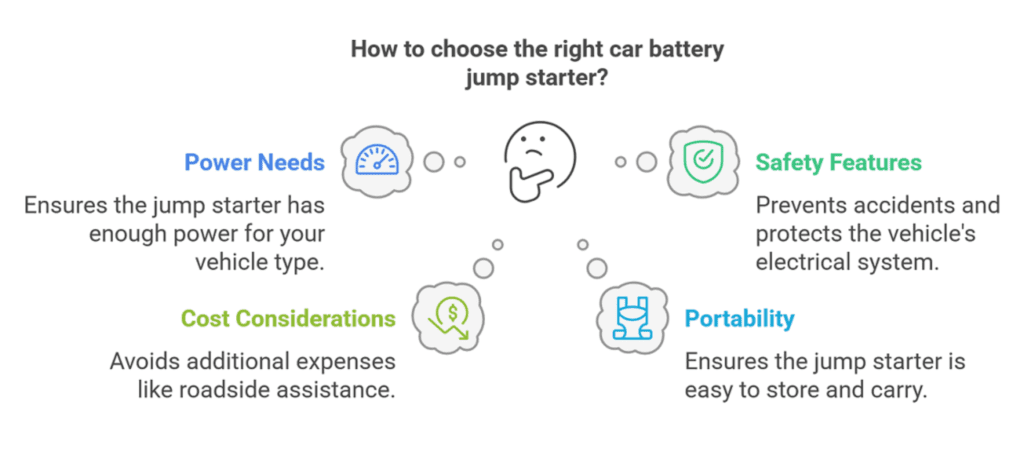
So, how do you avoid these problems and select the right car battery jump starter for your needs?
Solution: How to Choose the Right Car Battery Jump Starter
Choosing the right car battery jump starter involves understanding your requirements and evaluating several key factors. Here’s a step-by-step guide to help you make the best choice:
1. Understand Your Vehicle’s Requirements:
Start by knowing your vehicle’s power needs. Different vehicles have different battery sizes and power requirements. For instance:
- Small Cars: Most of the small cars require a car battery jump starter with a peak amp rating of 400-600 amps.
- SUVs and Trucks: Larger vehicles may need a battery jump starter with a peak amp rating of 800 amps or more.
You should refer to your vehicle’s manual or consult with a mechanic to find the right car battery jump starter power for your specific model.
2. Check Peak Amps and Cranking Amps:
You must consider two essential specifications namely: peak amps and cranking amps:
- Peak Amps: This is the maximum power the jump starter can deliver in a short burst. It’s crucial for starting your car. For example, a jump starter with 600 peak amps can typically handle most standard vehicles. however, 1000 peak amps or more may be required in case you are driving a larger vehicle, like SUVs, trucks, etc.
- Cranking Amps: This measures the power the car battery jump starter can deliver continuously for 30 seconds. A higher cranking amp rating means the jump starter can provide more sustained power, which is crucial for starting larger engines. Further, there are two categories:
- Cranking Amps (CA): measures the current from jump-started at 32°F (0°C) for 30 seconds.
- Cold Cranking Amp: Measures the current value at 0°F (-18°C).
Generally, for a standard car, cranking amps of 300-500 is usually enough, whereas in colder environments or for larger vehicles, you should consider buying a car battery jump starter with higher ratings.
Real World Case Study
To illustrate the importance of choosing the right jump starter, let’s look at a real-world example.
Case Study: The NOCO Boost HD GB70
One of my best friends, who lives in Wisconsin and works as a trucker, recently had a great experience with the GB70 jump starter. He was on a camping trip when his truck’s battery unexpectedly died—more than once. Thankfully, the GB70 came to the rescue each time. He was really impressed by how reliable and powerful it was. What stood out to him was the built-in safety features, like spark-proof technology and reverse polarity protection.
These features made it easy for him to use the jump starter without worrying about any technical issues. It really made a difference during their trip, and he appreciated having such a dependable tool on hand.
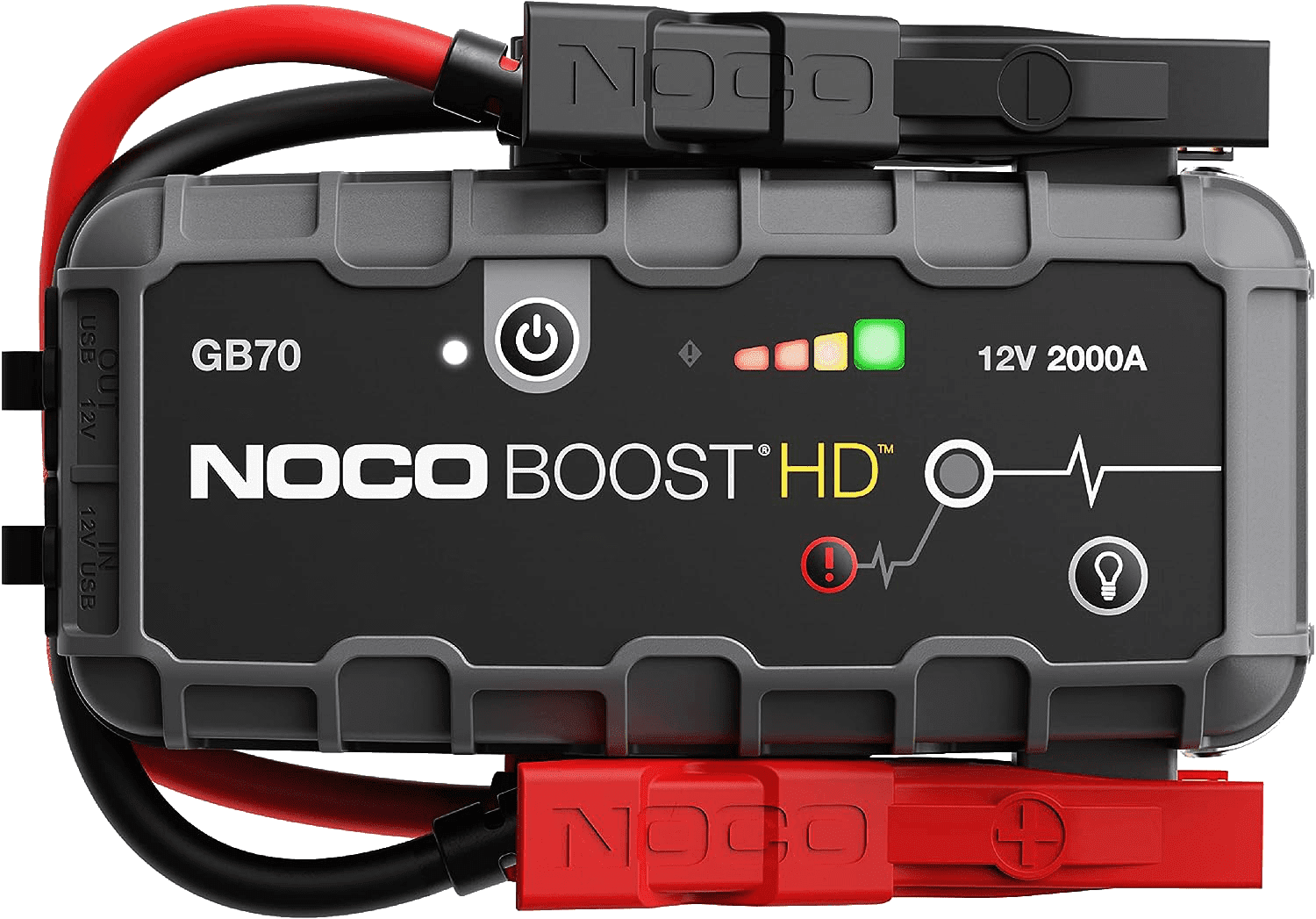
“The NOCO Boost HD GB70 is a popular choice among personal and commercial vehicle owners. This model generates 2000 peak amps, suitable for both cars and larger vehicles like trucks and SUVs. In addition, it has a battery capacity of 15,000 mAh, thus can provide multiple jump starts on a single charge.”
Check Latest Price3. Consider the Battery Type
Jump starters use one of three types of batteries:
- Lead-Acid Batteries: These are the old-school type and are often cheaper. They are reliable but require more maintenance and have a shorter lifespan compared to others.
- Lithium-Ion Batteries: These are more compact, lighter, and have a longer lifespan. They are good for portability and high performance but are pricier.
- Gel Batteries: These are a type of lead-acid battery with a gel electrolyte. They are less prone to spillage and offer a balance between performance and safety.
The right battery type depends on your preference for weight, performance, and budget.
4. Look for Essential Safety Features
Safety first. Here are features to ensure your car battery jump starter is safe to use:
- Reverse Polarity Protection: Prevents damage to the jump starter and your vehicle if the clamps are connected to the wrong terminals.
- Overload Protection: Guards against overheating and overcharging.
- Short-Circuit Protection: Prevents sparks and electrical shorts.
- Overcharge Protection: Extends the battery life by preventing overcharging.
Check the specs and user reviews to make sure these features are included in your chosen model.
5. Evaluate Ease of Use and Portability
A jump starter should be user-friendly. Consider these:
- Controls and Indicators: Look for clear, easy-to-use controls and indicators. Some models have LED displays and audible alerts to guide you through the jump-starting process.
- Cable Length and Clamps: Longer cables provide more flexibility and ease of use. Make sure the clamps are sturdy and well-insulated.
- Size and Weight: A well-designed jump starter should be balanced and not cumbersome to handle, making it easier to use in emergencies.
- Handle and Design: Look for car battery jump starters with ergonomic handles and compact designs that make them easy to carry and store. Some models come with built-in handles or storage compartments for cables and accessories, adding to their convenience.
A 2023 study by Consumer Reports found that users prefer car battery jump starters with easy-to-use controls and longer cables, as these features matter most in usability and effectiveness.
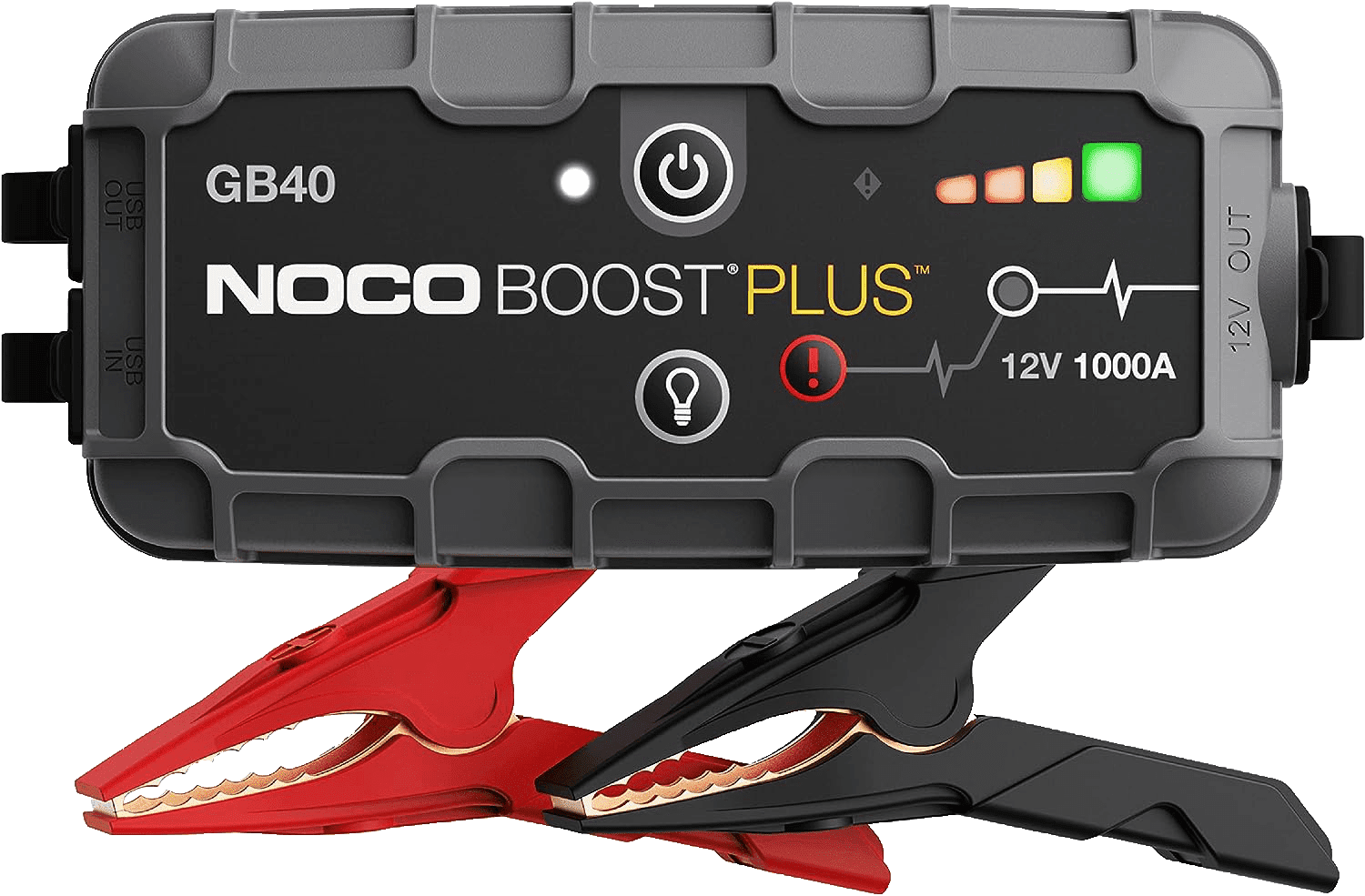
To read the product review for a different variant, NOCO GB40 from the same brand, click the link below. You’ll get a fair idea about the PROS and CONS of this brand.
*60K+ bought past month
NOCO BOOST PLUS – GB40
1000A UltraSafe Car Battery Jump Starter, 12V Battery Pack, Battery Booster, Jump Box, Portable Charger, and Jumper Cables for 6.0L Gasoline and 3.0L Diesel Engines
6. Durability and Build Quality
- Construction Materials: The construction material of the car battery jump starter should be rugged and of high quality so that it can withstand rough handling and last longer.
- Water and Impact Resistance: Some jump starters are built to be water-resistant or shock-resistant. These features can be valuable if you anticipate using the jump starter in adverse conditions or need it to withstand occasional drops.
7. Research Brand Reputation and Reviews
Researching brands and reading user reviews will give you an idea of the performance and reliability of different jump starters. Brands with good reviews and reputations often offer better products and customer support.
For example, brands like NOCO, Jump-N-Carry, and DBPOWER are highly recommended for their reliability and customer satisfaction. Check online forums, retailer websites, and consumer reviews to see which brands are trusted and well-reviewed.
8. Compare Prices and Warranty
Car battery Jump starters vary in price based on features, capacity, and brand. You should select your budget and select options within that range. Higher priced models may have more features and longer warranties but make sure the investment is worth it.
Further, you ought to check the warranty offered by the manufacturer. A good warranty covers almost all defects and issues in the jump starter. Many reputable brands offer 1-3 year warranty.
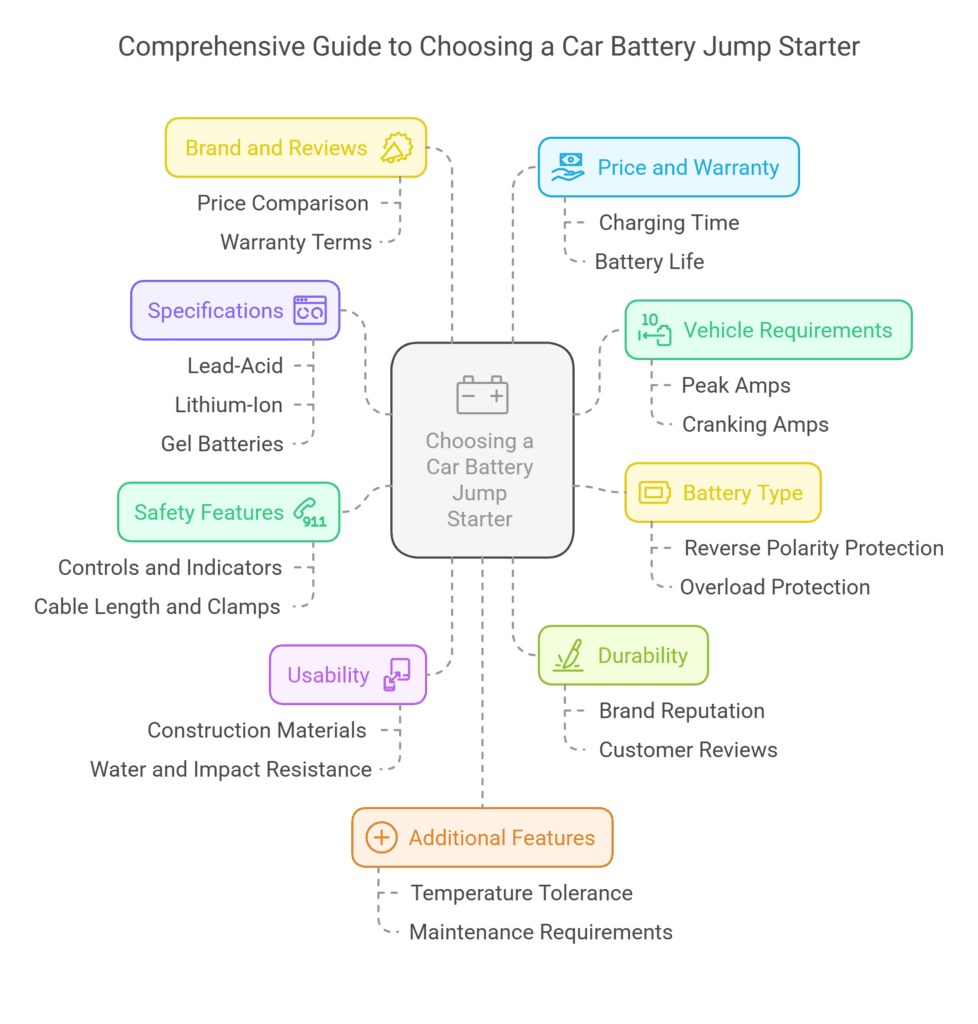
9. Charging Time and Battery Life
- Charging Time: Consider how long it takes to fully charge the jump starter. Some models may take several hours to charge, while others can be ready in less than an hour. If you need a jump starter that’s always ready to go, a shorter charging time can be crucial.
- Battery Life: Look at how long the jump starter holds a charge. Some models may lose their charge quickly if not used regularly, which can be problematic. A good jump starter should retain its charge for several months, so it’s ready when you need it.
10. Temperature Tolerance
Different jump starters have varying temperature tolerances. If you live in an area with extreme temperatures, ensure the jump starter can operate effectively in those conditions although there are some variants designed to operate in a broader range of temperatures, thus making them versatile.
11. Maintenance and Care Requirements
- Routine Maintenance: Battery Jump starters require regular maintenance to keep them in good working condition. Hence, you should charge it regularly, check for any visible damage(s), and keep the connecting terminals clean. Understanding the maintenance requirements will help you keep your jump starter reliable over time.
- Storage Conditions: Proper storage can be a vital factor in enhancing the life of your jump starter. You should ensure that the jump starter is stored in a place that is free from moisture, cool, and not getting direct sunlight. Follow the manufacturer’s storage recommendations to avoid any issues.
12. Customer Support and Service

- Customer Support Availability: Before purchasing, you’d like to check if good customer support service is offered by the manufacturer. Good customer support service is important if you experience any issues with the jump starter. So, choose only those brands that provide reliable support teams and clear warranties.
- Repair and Replacement: If there is a malfunction in the jump starter, you’d like to consider all the options available for repair or replacement. For instance, some manufacturers offer repair services or replacement parts, which can be of a significant advantage.
Frequently Bought Together
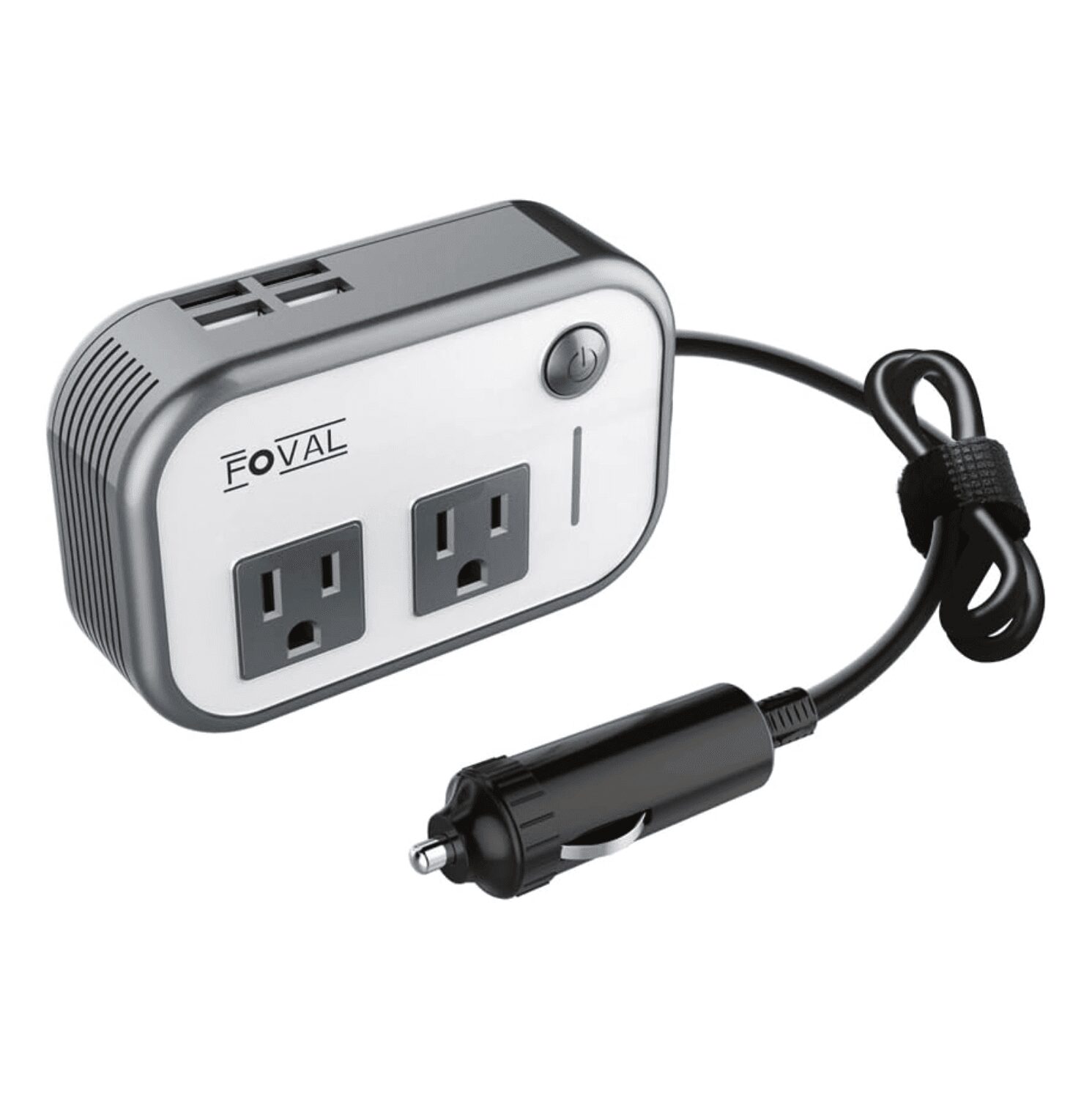
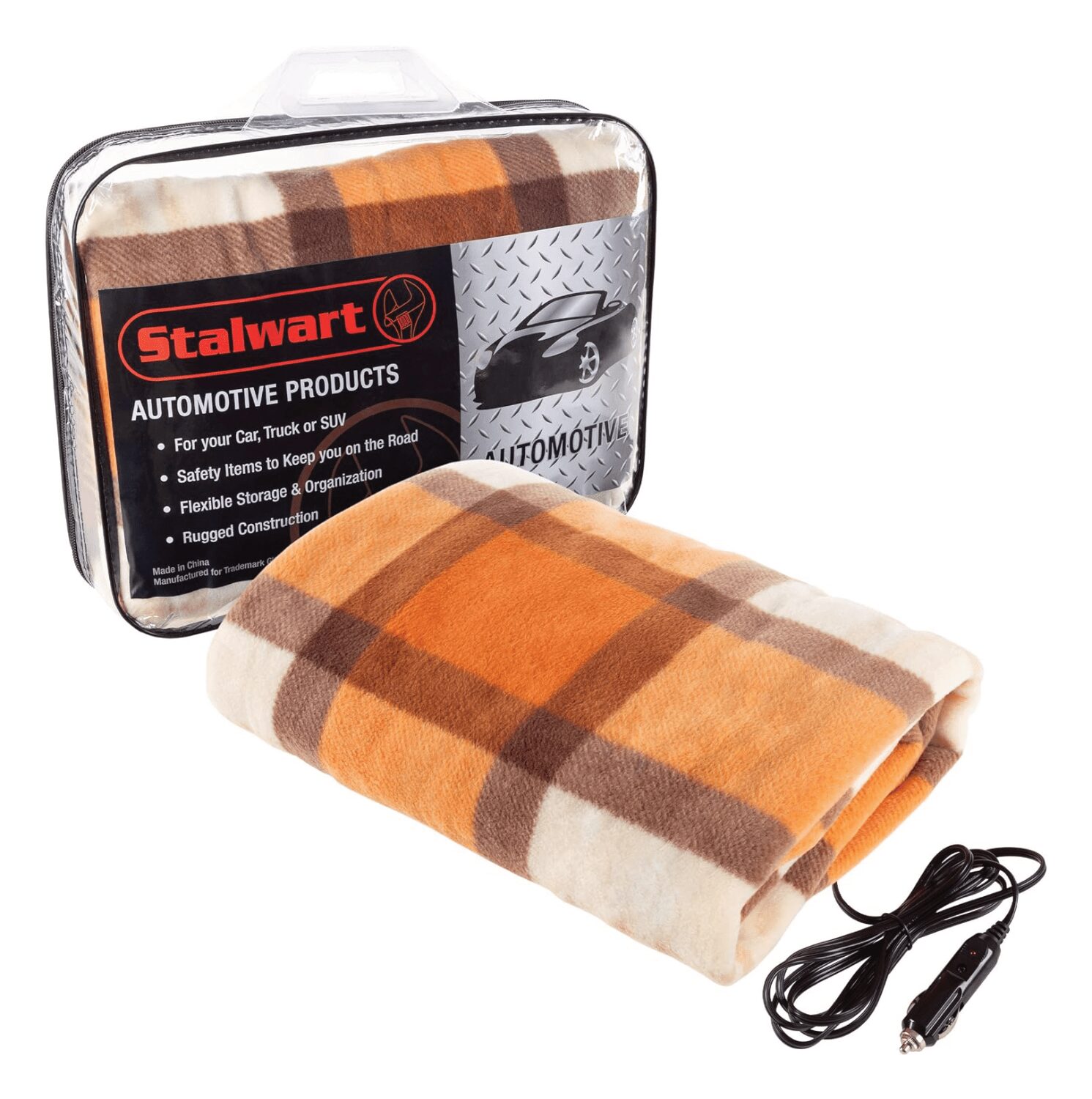
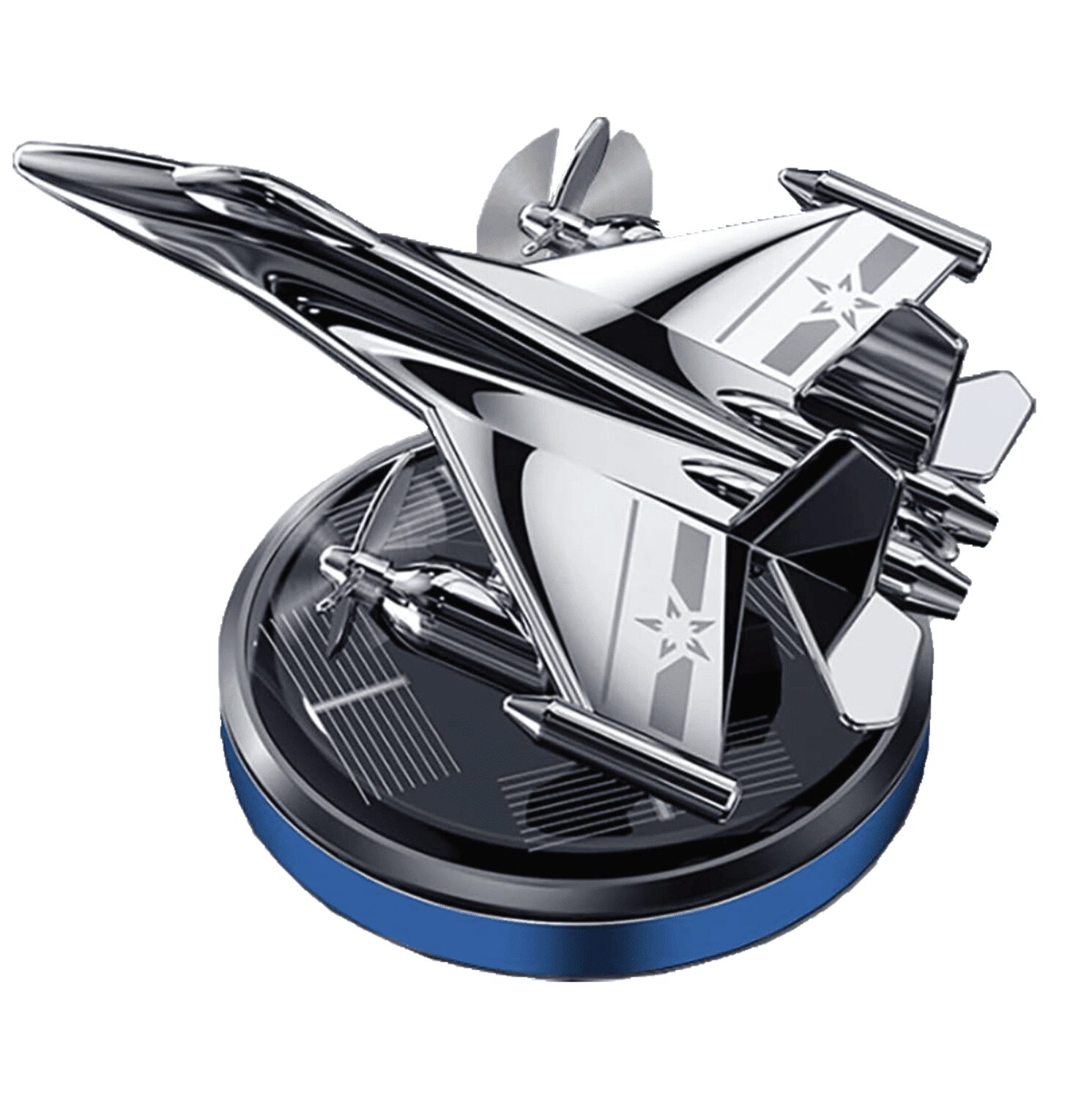
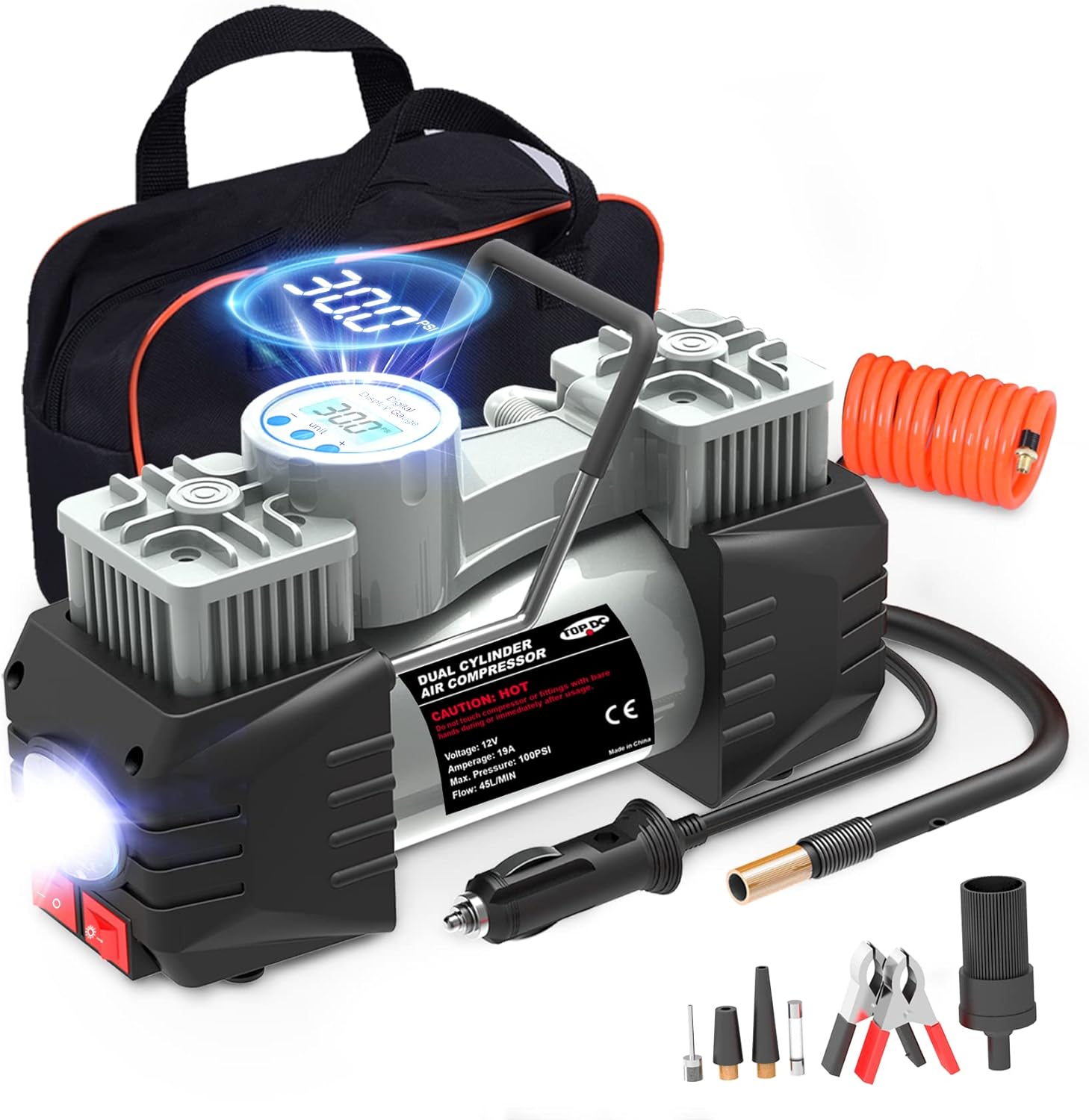
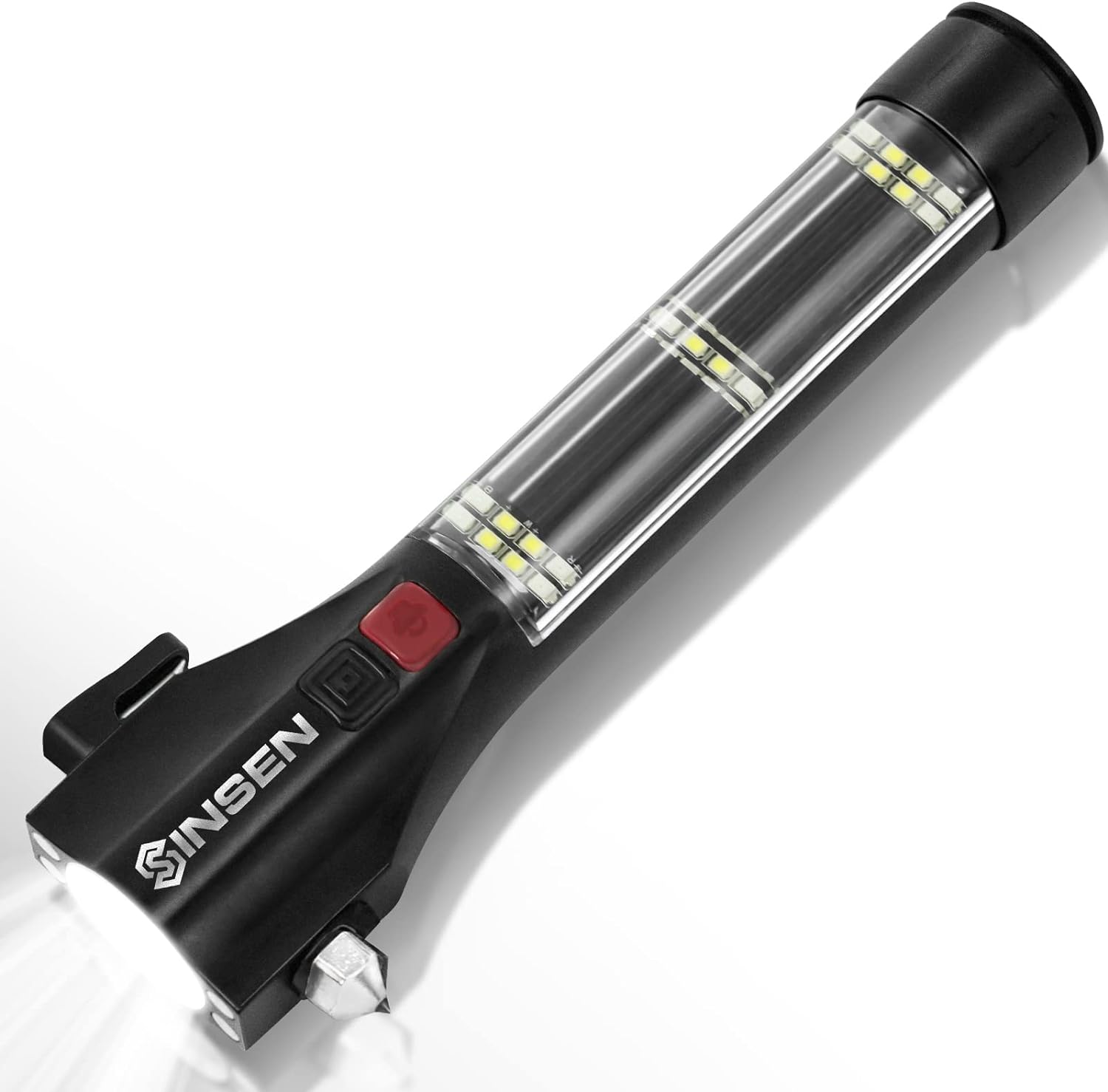

13. Check for Additional Features
Some jump starters have extra features that can be useful:
- Built-in Flashlight: A flashlight is handy during nighttime emergencies or low-light conditions.
- USB Ports: Charging your devices like smartphones and tablets is a nice bonus feature.
- Air Compressor: An air compressor is useful if you also need to inflate tires.
- Digital Display: Some advanced jump starters come with digital displays that show battery levels, charging status, and other useful information. Such features can help you analyze the efficacy and physical condition of your jump starter.
While extra features add to the cost, they provide added convenience and functionality.
Test and Maintain Your Jump Starter
After buying a jump starter, test it to make sure it works. Follow the manufacturer’s instructions for initial charging and testing. Regular maintenance is also important:
- Keep it charged: As it is a critical part of your car accessories, hence you must ensure that the jump starter is charged regularly to be used in exigency.
- Inspect for Damage: You should make it a routine practice to check your jump starter for any signs of damage to ensure its efficacy and reliability.
A 2022 study by Car and Driver found that users who maintained their jump starters properly had fewer issues and higher reliability when needed.
Conclusion
Choosing the right car battery jump starter is key to avoiding a dead battery and being ready for emergencies. By knowing your vehicle’s power requirements, checking peak amps and cranking amps, battery type, and looking for must-haves, you can find a jump starter that suits you. Additional features, brand, and price are also important.
I own a NISSAN X-Trail which I purchased an year ago. From my own experience, I believe that buying a good jump starter gives you peace of mind and you’ll be ready to handle battery issues with confidence. With a jump starter in your car, you’ll be ready for the unexpected and can tackle battery problems.
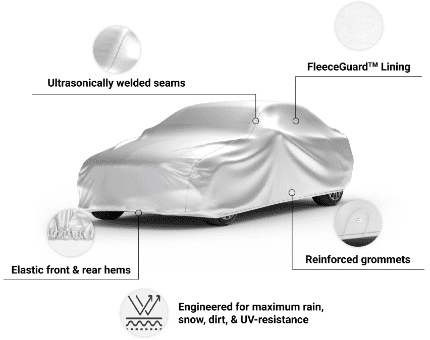
19k+ Reviews
Platinum shield Car Cover
$194.95
Premium 100% weatherproof defense
FleeceGuard™ scratch-free lining
Breathable & resistant to mold, rot, & mildew
FAQs
How do car jump starters work?
A car battery jump starter generates a power surge from the battery, high capacity. This surge helps the dead car battery to kick start, thus allowing the engine to turn on and start.
Can a jump starter start a completely dead battery?
Fortunately Yes!. A jump starter is technically designed to kick-start a completely dead battery by providing the required power to start the en gine of a vehicle.
What is the average life of a jump starter?
Although companies boast 3 – 4 years life of their respective models, the average life of a car battery jump starter, with adequate care and maintenance, is generally about 2-3 years. Further, with the advent of new technologies, the lifetime of a super-capacitor car jump starter is as long as 10 years, however, there are certain limitations with supercapacitors in context to energy storage capacity which is considered to be lesser than the normal car battery jump starters.
How do I maintain my car battery for longevity?
Regular maintenance of your car battery is important, if you want your car battery to enjoy a longer life and perform effectively. Below are some practical steps to be taken to keep your vehicle’s battery intact and operational:
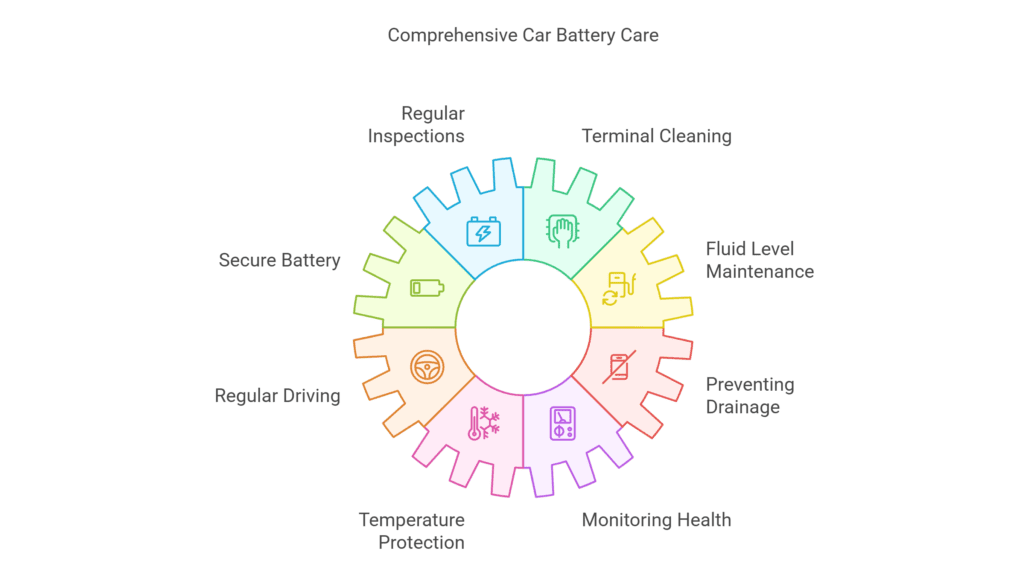
- Inspect the Battery Regularly: At the outset, check for signs of corrosion, leaks, or damages. If you see white, ashy deposits around the terminals, it indicates corrosion.
- Clean the Battery Terminals: If you see corroded terminals, clean the terminals with a mixture of baking soda and water. To clean, disconnect the battery (negative terminal first), and scrub the terminals followed by a water rinse. Reconnect the terminals, but make sure that the positive terminal is connected first. Apply some terminal protection spray.
- Secure the Battery: Ensure the battery is tightly fastened to prevent vibrations that can damage internal components and reduce lifespan.
- Maintain Fluid Levels: For maintenance-required batteries, check and top up fluid levels with distilled water as needed, but avoid overfilling.
- Drive Regularly: Regularly driving your vehicle, for sure, keeps the car battery charged. Short trips may not fully recharge the battery, hence it is advised that you’d take longer drives, occasionally.
- Avoid Draining the Battery: Turn off all accessories like lights and the radio when the engine is off to prevent battery drain.
- Protect from Extreme Temperatures: Use a battery insulation kit in cold weather and park in the shade in hot weather to prevent temperature-related issues.
- Monitor Battery Health: Periodically test your battery’s health with a multimeter or have it tested at an auto parts store to catch potential problems early.
- Avoid Deep Discharges: Prevent complete discharges as they can significantly reduce battery lifespan. Although there can be multiple reasons for a deep discharge, parking the vehicle with the car roof light OR parking lights on can result in deep discharge. Ensure all the lights are turned off before parking the vehicle.